 Shaka
Paranormal fraud: one-day master's degrees, cardboard diplomas and how to recognize a real investigator
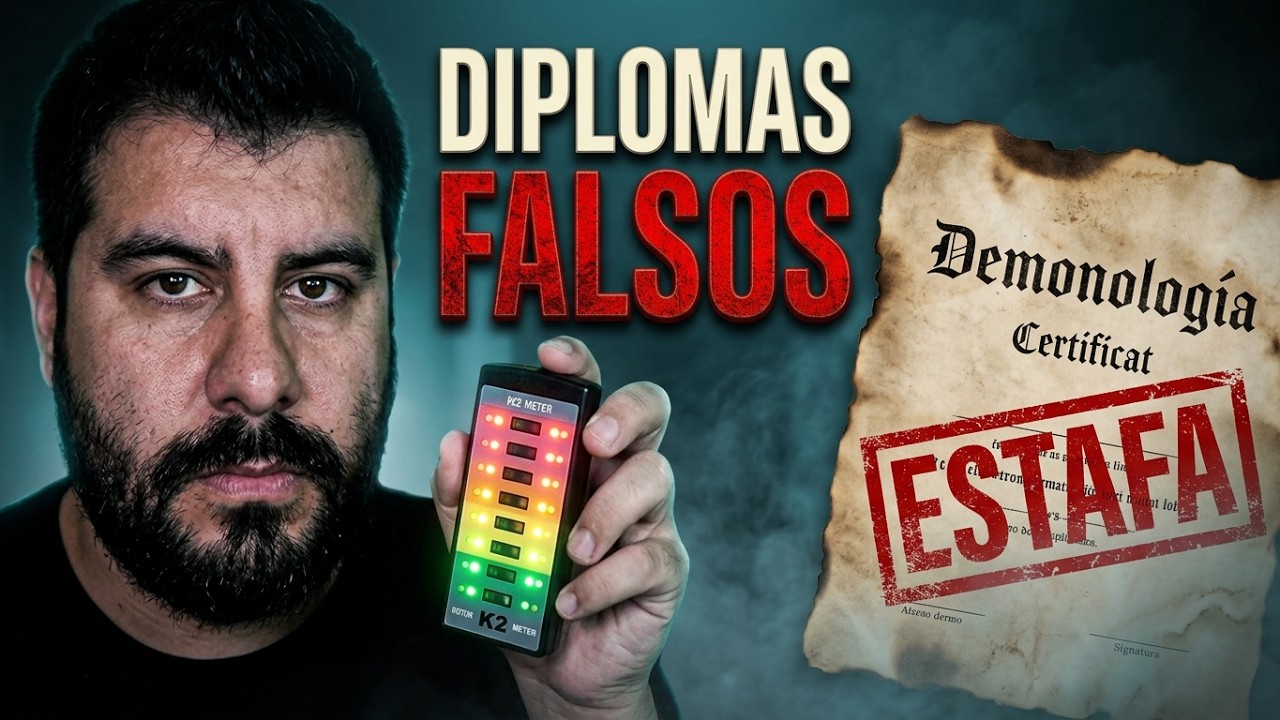
Video in Spanish.
"People learn to speak with confidence, but not to doubt. And when someone doesn't doubt, that's where the danger begins."
Walter Jara and I sat down to clear the field, as we say in Uruguay.
In this article (8)
This isn't an episode against people. It's an episode against a practice: selling titles, courses and fear to people who are going through a hard time.
Building authority by saturation
I read that phrase before the show and it blew my mind. It perfectly describes what's happening: profiles that pile up dozens of titles to look like an unquestionable authority.
I saw one that, in a single post, listed demonology, angelology, high magic, several "schools", quantum healing and a postgraduate degree in dream interpretation.
"To be a real demonologist you have to spend years studying within a religious tradition. You don't learn it in a three-hour course."
Walter summed it up better: "Jack of all trades, master of none".
The real problem: the families
This isn't just any hobby. These people later walk into the home of a frightened family and tell them they have "something negative" inside.
"There, nice words and flashy titles aren't what's at stake. People's emotional peace is."
A person who believes they're an expert can create fear where there is none, can make a family sleep badly for months and can make them dependent on someone who presents themselves as an authority without being one.
Groups where doubting is forbidden
Walter knows some of these groups from the inside. The same thing repeats in all of them: if you question, you're out.
"They all applaud each other, they all validate each other, and meanwhile the family trusts them."
The saddest part is that many end up there looking for a place to talk about the paranormal without being judged, and end up paying for courses that teach them nothing.
What the show looks like from the inside
Over the years, Walter and I have seen everything: "contacts" that only appear when the camera turns on, spiritual rescues solved in five minutes, tours that charge for walks full of lies, and so-called courses to "become an investigator" where not a single device is ever turned on.
"If you have 17 years of experience, show me an EVP of yours. Just one."
How to recognize a real investigator
While we were talking I realized something: Walter went more than an hour without mentioning even once that he had been on Discovery Channel or on Chilean TV. I had to say it myself.
That's the first sign. These are the others:
- They have published investigations. If someone says they're a carpenter and doesn't have a single table, they aren't one.
- They don't sell certainties. They say "I don't know" without a problem.
- They distinguish phenomenon from ghost. They measure, document and don't claim that whatever set off the device is a demon.
- They know their equipment. They know what it measures, when it gives false positives and how to use it.
- They put the family first. They don't tell a frightened mother she has Satan in her house.
What real experience is: the lesson from Colombia
I told two anecdotes from my time in Colombia, the kind that teach you in three words what a course won't teach you in a year.
Isabel advised me to adapt to each family's beliefs: if they're Catholic, bring a rosary. Not because the rosary does magic, but because the person's trust is part of the process.
Alexander told me about the day a person who claimed to be possessed came to him. He showed them a "sacred medal" and the person writhed in pain. The medal was an ordinary coin.
"That's experience: knowing that psychology weighs a lot and not confusing it with a demon."
The phenomenon is real, the circus isn't
We closed by remembering why we do this: because the phenomenon exists, it can be measured and it's fascinating. Like the feeling Walter and I chased at the preventorium and measured at 35 mG.
"We were able to measure a hunch. That's what we're passionate about. Not the applause."
Closing: always doubt
Walter said it better than I could:
"Doubt, whatever title they put on it. Someone paying for a course doesn't mean they know it all."
Want to watch the full episode?
Watch it here: https://www.youtube.com/watch?v=gfjV2lYXIPw
Have you seen profiles like these? Do you think these titles are worth anything?
I read every comment on the YouTube video.